



Free preview
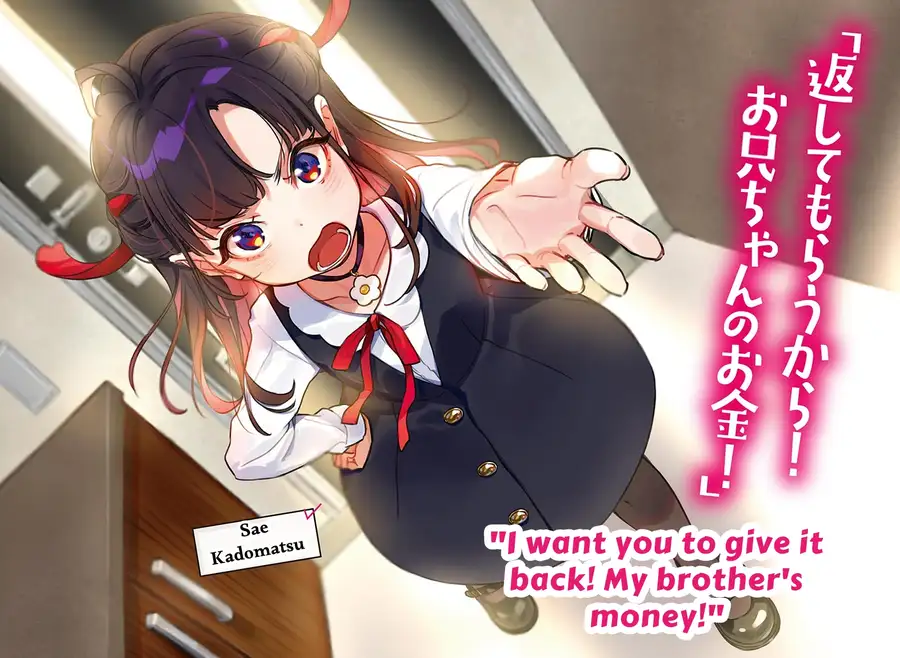
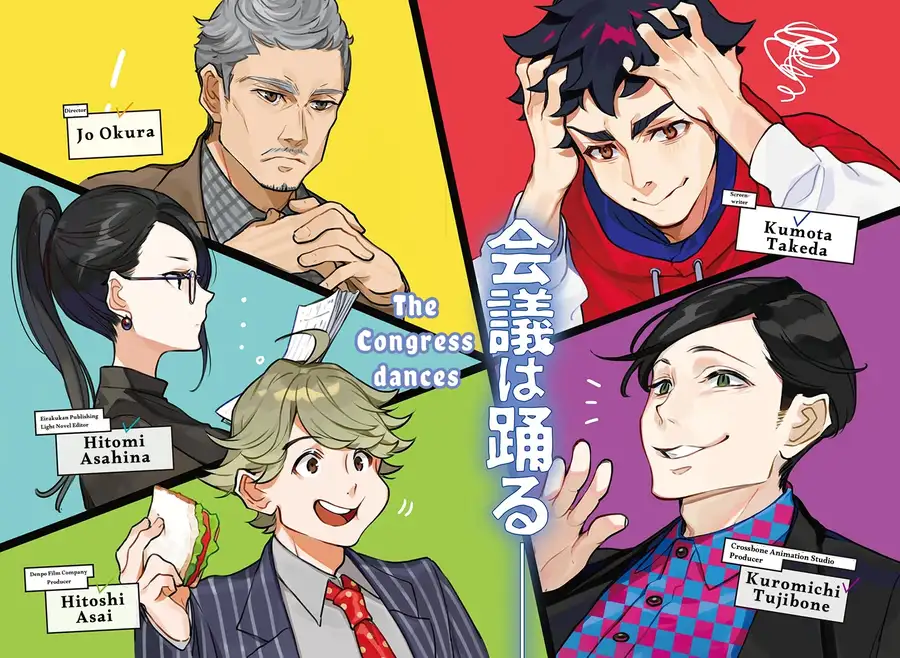
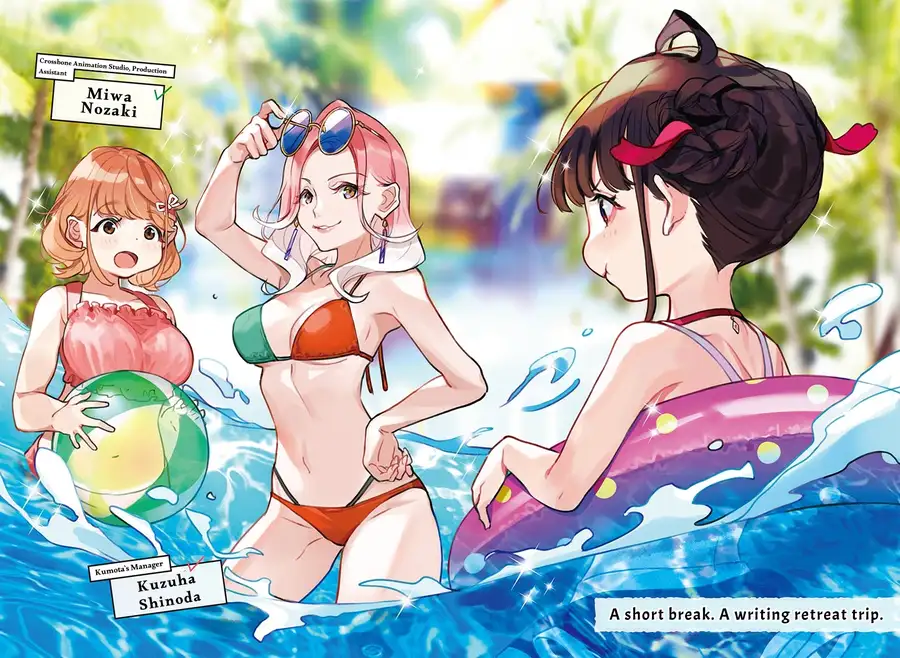
Episode 1: Crappy Script
I sat on my couch at home, took a deep breath to calm myself, then opened the video app on my phone.
I scrolled through my recorded shows.
A Kiss From Left Field
I selected the anime with that title, then hit play.
Screenplay by Kumota Takeda
The opening music started along with the visuals, and my name appeared on screen.
This was the final episode of an anime I'd written the screenplay for, but I hadn't actually watched it properly since the A-part of episode one. A caption appeared at the corner of the screen.
Previously on . . .
The protagonist and heroine made their appearance at their high school. They were in the middle of a fight, with the protagonist hurling insults at the heroine.
I don't like you at all!
Two seconds later, it transitioned to a scene from later in the series where the same protagonist slams his hand against the wall and confesses to the heroine.
Actually . . . I don't hate you.
Their lips moved closer, just about to touch, when suddenly . . .
A man with a mohawk appeared in front of them, brandishing a gun.
Hey there! Hand over your money!
The protagonist tried to protect the heroine.
Look out . . . !
Ahhhhhhh!!
After the heroine screamed, the screen went black and gunshots rang out.
I braced myself and pressed the button.
Comments On
The comments section activated.
Viewer comments immediately flooded the entire screen.
Crime rates are off the charts.
Why did it get so violent all of a sudden?
Setting makes no sense.
Obvious trainwreck!
Crappy script.
How strange. In my script, I wrote that character as a delinquent high school student. But that guy with the mohawk and gun—was that really supposed to be him? He was wearing a spiked leather jacket instead of a school uniform.
The scene cut to a hospital, where a serious-looking doctor explained the situation to the heroine.
All five bullets pierced his heart . . . but we managed to save his life. He'll be able to play guitar again soon.
Thank goodness . . . !
The heroine teared up with relief, but more comments flooded across the screen.
Aw man, there's no way . . .
Oh woooow, look who's back from the dead.
Doctor too OP!
Painful to watch.
Crappy script.
Sure, I wrote a scene where the protagonist gets injured, is hospitalized, and recovers, but I didn't remember making him immortal. As I held my head in my hands, the doctor continued speaking with the same serious expression.
More importantly, when we tested the blood you donated for him, we discovered that you have a rare disease. Odds of having it are one in ten billion.
No way . . . !
The heroine's stunned expression was no longer visible, buried under too many comments.
Here comes the wild twist!
Infection rate is insane.
That's more than Earth’s entire population . . .
Confirmed disaster.
Crappy script.
I remembered the producer contacting me about revising the script a bit here, since making it too specific a disease would be problematic. But I never expected it to become such an ultra-rare condition.
Eventually, the protagonist burst into the hospital room, out of breath. For some reason, he was holding a giant rice ball in his hand. The heroine, lying in bed, looked surprised.
What are you doing here? Isn't today your band's important audition?
I'm more worried about you. Besides, I'm quitting the band . . . I've decided to become a soccer player and aim for the World Cup!
The moment the protagonist shouted this, a storm of comments raged across the screen.
Huh?
Huh?
Huh?
Huh?
Huh?
Huh?
Huh?
Huh?
Huh?
I couldn't help but mutter the same in response.
Huh?
The heroine's life support alarm started beeping.
Are you okay?! Don't die!
As the protagonist desperately called out to the heroine, she suddenly rolled her eyes back and let out a scream.
I am an evil spirit sent from the underworld! I have taken over this woman's body!
What?!
The protagonist showed exaggerated surprise, while the heroine, who had been lying in bed, sat up with a sinister grin.
Give me your soul!
Ahhhhhhhhh!
The scene where the heroine sucks out the protagonist's soul through mouth-to-mouth contact was completely obscured by the comments.
Crappy script.
Crappy script.
Crappy script.
Crappy script.
Crappy script.
Crappy script.
Unable to bear it any longer, I closed the app.
Then my phone rang. A name appeared on the screen.
Kuzuha Shinoda
It was my manager.
As soon as I answered, Kuzuha got straight to the point.
Morning, Kumo. Did you watch it? A Kiss From Left Field?
Yeah . . . Just the final episode.
Well, only the recap, though I didn't mention that detail. Kuzuha responded cheerfully.
Finally watched it, huh? It's become quite the topic.
Yeah, it's really become the talk of the town.
My tone was heavy with sarcasm. Kuzuha laughed.
Did you see it online? That's fine. Better to be criticized than ignored completely.
What scares me is that I might end up agreeing with that criticism myself.
Kuzuha's voice rose in surprise.
Huh?! Were you unsatisfied with how it turned out or something?
Is she seriously asking this? I launched into the questions I'd been mentally organizing.
First off, why did the protagonist get shot by some random mohawk guy?
The story about the protagonist getting injured and being unable to play guitar—that was your idea, wasn't it, Kumo?
I wrote that he'd get into a fight with some delinquent who was picking on him and hurt his finger.
But fight scenes are a nightmare for the animation team when they're working on such a tight schedule, aren't they?
Even so, five bullets to the heart?! The protagonist's survival rate and that mohawk guy's accuracy are both completely absurd!
The production team probably figured flashier was better, right? Since he was going to recover anyway.
Right! And since he's apparently aiming for the World Cup in soccer now anyway! Why?!
I mean, if he stayed in a band, they'd need a budget for original songs, right?
More importantly, what was that giant rice ball the protagonist was holding in that scene?!
Huh? Rice ball?
Kuzuha burst out laughing before answering.
Oh, that was supposed to be a soccer ball. When we outsourced it overseas, the animation quality completely fell apart.
Forget it . . .
I let out a deep sigh and hung my head.
I understood perfectly. Not a single staff member was at fault.
The production team was working hard day and night with barely any sleep, trying their best to improve the work despite razor-thin schedules and budgets.
The only one at fault was me—the screenwriter.
I should have written a script passionate enough to ignite the staff and cast's enthusiasm, and compelling enough to make executives happily open their wallets. I was the root of all evil. The tight schedule existed because I hadn't delivered an interesting script quickly enough in the first place.
If you're frustrated, then hurry up and write an interesting script.
I thought I heard a familiar voice and glanced at the TV stand, where a dusty picture frame had fallen over.
. . . !
I picked up the picture frame and brushed off the dust.
The faded photograph showed my younger self and my late partner.
In the photo, the two of us were proudly holding up a massive trophy between us. I could barely make out the words "Outstanding Anime Screenplay Award" engraved on the metal plate at the trophy's base. Back when I still had dreams. But reflected in the glass of the frame was my current pathetic face, complete with stubble.
Chikao . . .
I found myself silently calling my late partner's name.
He must've still been watching from above, seeing what kind of work I was doing.
I thought that if I wrote good scripts, they could maybe even reach heaven. That's what I'd been working toward. But . . .
Kuzuha spoke up irritably from the other end.
But you know, the gory developments in the second half were your idea, weren't they, Kumo?
That's certainly true . . .
I acknowledged my guilt.
When I jokingly mentioned it during the script meeting, the horror-loving director got completely on board . . . the CG team jumped on it too, and I couldn't . . . pull it all together.
Why did you make such a joke?
Under Kuzuha's questioning, I explained like a criminal confessing.
The voice actress playing the heroine said she wanted to try a sadistic villain role once, so the higher-ups asked if we could work something in for this project . . . and I got carried away.
It was a moment of weakness, then.
But . . . that doesn't matter to the viewers. It's all my fault.
You're overthinking it. You're a crappy screenwriter with nerves of steel, aren't you?
Kuzuha said this proudly, but it wasn't the least bit encouraging.
But fine. Even if it wouldn't become a masterpiece worthy of reaching him in heaven, even if I would get torn to shreds like I was in hell, I had to continue.
I had a reason for taking this job . . .
Kuzuha sounded confused by my sudden passionate declaration.
What's that, you say?
It's because . . . the voice actress playing the heroine is a super popular idol!
Huh? Were you a fan?
No. Secondary royalties!
Huh?
When a show is rebroadcasted, aired overseas, or made into DVDs or Blu-rays that sell well, secondary royalties—what we call script royalties—go to whoever's credited with the screenplay. The bigger the lead's fanbase, the more DVDs get sold. And if they throw in priority tickets for events and stuff, it's even better.
So no matter how harsh the criticism gets, I'll endure it for the script royalties!
But Kuzuha's reaction was lukewarm.
Ahh. About that . . .
I got a bad feeling from Kuzuha's tone.
What . . . ?
The DVD probably won't be released.
What the hell is this woman saying?
Are you stupid? That heroine's popularity is amaz—
Kuzuha cut me off.
The voice actor who played the doctor got arrested for assault.
For a moment, it felt like time had stopped.
Huh?
I didn't really understand what Kuzuha meant, so I asked again. I shouldn't have.
Apparently he got drunk and punched a bar employee. So forget about DVDs—even reruns are questionable. Meaning there won't be any secondary usage.
When I heard that, my head went completely blank.
Then . . . what was it all for? All those sleepless nights responding to revision requests from executives, enduring that hellish criticism . . . ?!
Anyway, good work. I have another job to discuss, so let's meet at the usual coffee shop—
Kuzuha kept talking, but I couldn't hear her. I then slowly collapsed to the floor.
Hey? Are you listening?! Hey!
Lying on my back, staring blankly at the ceiling, I thought I could hear the sound of a final bell ringing over Kuzuha's voice coming from my phone.
Episode 2: Ship of Mud
After that, Kuzuha asked me to meet her, and now I was sulking in a corner seat at Chekhov Coffee, the coffee shop we always use for meetings.
I could use a stiff drink.
Kuzuha scolded me for the thought.
It's still early afternoon, and this is a coffee shop.
I reluctantly drank the espresso I'd ordered to wake myself up. Bitter intensity flooded my mouth, making me grimace even more than I already was. The elderly owner of this shop always smiled kindly, but his coffee was incredibly bitter.
But it worked out well, right? At least the broadcast finished without incident.
Kuzuha, who had been elegantly sipping tea at the neighboring seat, set her cup on its saucer.
What part of that was without incident?
I glared at Kuzuha.
I won't get script royalties, and it didn't become something that would make him proud up in heaven . . .
Him again?
Kuzuha furrowed her brow.
Give it a rest already. I know he helped you out back in the day, but—
It wasn't just help!
I couldn't help raising my voice, and suddenly overwhelmed with emotion, my words came out tearful.
He . . . Chikao was my lifesaver.
Here we go again.
Kuzuha examined her nails with exasperation. I continued talking regardless.
We'd been drawing manga together since middle school. I'd come up with the rough drafts, he'd handle the art—we were both rivals and partners. When he became an anime director as an adult, I was so happy. Meanwhile, around that time I was—
Failing at job hunting and spending your days working part-time jobs, right?
Kuzuha stole my line, but I continued the story.
That's right . . . But Chikao brought me into the anime world as a screenwriter.
Remembering my lofty ambitions from those days, I spoke with renewed strength.
His passion for his work was extraordinary. He was incredibly harsh on the scripts I wrote too. We clashed countless times—sometimes we even came to blows.
I've heard that a million times too. Right now, I'm the one who wants to punch you.
Kuzuha said this in a cold tone, but I ignored her and continued talking.
But thanks to that, the finished anime became popular. Back when we were drawing manga together, nobody gave us the time of day, but I was so happy when the work we created together was recognized by the world—and yet . . .
Just as he was beginning to gain attention as a director, he collapsed at work and died surrounded by all the drawings scattered across the floor.
I remembered Chikao's funeral. He lay in the coffin with a peaceful smile, as if he were dreaming. I felt like I'd been left behind all alone, and loneliness squeezed my chest tight. I took another sip of espresso. It had gone completely cold and seemed even more bitter than before.
You know what, why don't you get a girlfriend?
At Kuzuha's sudden suggestion, I nearly choked on the espresso I was drinking.
Huh?
That way the loneliness might go away, right?
Kuzuha rested her chin on her hand and looked at me.
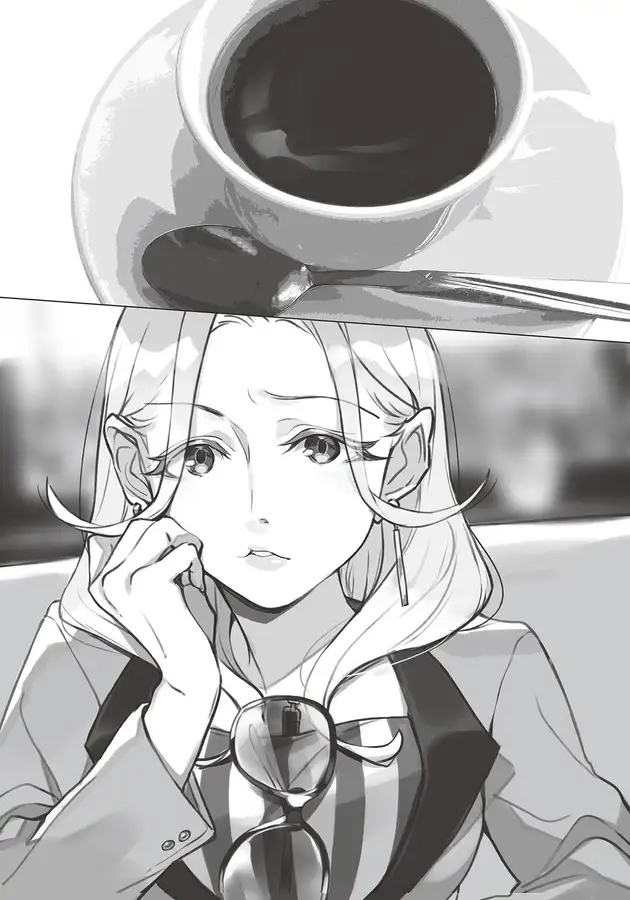
Oh wait, you can't get girls anyway, so never mind.
Hey now—
Before I could protest, Kuzuha rattled off alternative suggestions.
What about a pet? Tropical fish? Houseplants?
Don't need any.
How about moss then?
Moss?
Yeah. You know, those ball-shaped clumps. You could name it "Chikao."
I almost started imagining myself calling out my late friend's name to a clump of moss, but the thought was too ridiculous, so I stopped.
I mean, what kind of conversation is this anyway? Is this really worth calling me out here for?
Wait . . . hold on. Maybe . . .
Maybe this is her way of trying to cheer me up.
I decided to interpret it in that generous light.
Actually, she had saved me in some ways.
After I lost Chikao, I was never good at reading people or navigating relationships, and even when screenplay jobs came up, I kept clashing with everyone. Naturally, I gradually stopped getting called for work. At one point, I had no jobs at all and was completely lost.
That's when Kuzuha Shinoda, sitting right here, offered to become my manager. The fact that I could still make a living as a screenwriter was thanks to her. I should be grateful.
What are you looking at?
Sensing my gaze, she frowned.
So creepy.
All right, I take it back. Who could be grateful for this?
Come to think of it, while she seemed like a guardian angel, she was also a complete devil.
The entertainment industry—anime, games, live-action, and everything else with scripts—suffered from a chronic shortage of screenwriters. Even if you could write scripts, few screenwriters could survive an industry packed with difficult people. Plus, there were countless projects that were doomed from the start—too many cooks spoiling the broth, you know? Kuzuha Shinoda collected all these nightmare projects, made me write them, and pocketed most of the profits. She wasn't just a devil—she was a demon lord.
Speaking of which, about the next job—
Kuzuha traced the rim of her lipstick-stained teacup with her fingertip, recrossed her legs, and turned to face me.
This is a problem project on a scale incomparable to anything we've handled before.
As she said this, Kuzuha leaned forward just enough to give me a view down her shirt and peered up at my face. I was used to this, so I knew exactly what it was—a trap.
I refuse.
Before hearing the details, I tried to shut down the conversation. If I listened, it'd definitely be bad news. I was used to troublesome jobs, but I wanted to just pass on whatever she had to offer. However, she looked at me with pleading eyes.
I understand. You don't want jobs that are like boarding a sinking ship made of mud anymore, right? They sink before they even set sail, and your body and soul get covered in mud. I get it.
I'd never once thought of my work as a sinking ship, but in that moment, I was just tired.
I'm going home.
I stood up, but she continued.
But imagine this: what if it's the same kind of sinking ship, but one as big as the Titanic?
What the hell was that supposed to mean? I couldn't even imagine it. I stopped in my tracks despite myself.
If we could pull it off without sinking, we'd get rave reviews.
When you compare it to the Titanic, you're assuming it'll sink.
Of course, there'll also be people who just want to watch it crash and burn. But if that gets people excited, it's still a success. Either way, it's guaranteed to attract attention.
She said this with a triumphant smile, then pulled a large envelope from her bag and placed it on the table. The envelope had writing on it.
Fairytale Detective: The Movie
Case Files of the Fairytale Detective. You've obviously heard of it, right?
She asked me this with a smug expression, but I answered honestly.
Never heard of it.
What?!
Kuzuha was so shocked she nearly fell over backward, staring at me with her eyes wide.
You're kidding, right? Seriously? This anime that became such a huge hit? You're an anime screenwriter!
I don't use social media.
Even so! You go online, don't you?!
I basically only use it for research and email.
Even so . . . aren't you way too out of touch with the world? What are you, a hermit?
I was so taken aback by her reaction that I started feeling apologetic and answered nervously.
Well, um, I think I might have heard the title before . . . or maybe not . . .
Never mind. I'll fill you in. Just listen.
She launched into an exasperated explanation of the series. According to her, Fairytale Detective was an anime based on a light novel.
The genius girl detective Red Riding Hood teams up with Wolf, a veteran beastman detective, to solve fairy tale cases each episode. That's the basic premise.
According to her, the appeal came from the contrast between the fluffy fairy tale setting and the surprisingly serious mystery plots.
I especially loved the Hansel and Gretel episode. It's a locked-room murder at a candy house, and the way the siblings destroy the evidence is brilliant. They cleverly exploit the house's ability to melt from heat.
Kuzuha continued speaking with excitement.
Also, the part where Hansel confesses his motive for killing the witch to Wolf alone was so moving. Hansel's desire to protect Gretel resonated with the feelings Wolf never expresses toward Red Riding Hood.
She was getting so excited she looked like nothing more than a fan. I gave her a cold look.
You know, you praise anything that's popular.
Why not? If something's popular, it's good, right?
She answered as if it were obvious. It was the perfect philosophy. That was why, even if she pressured me or offered incentives for work, she'd never once praised anything I'd written—not even once, and it was almost refreshing. As long as my work didn't sell, it'd probably stay that way.
I suddenly noticed the large text on the book's obi.
10 Million Copies Sold!
I casually glanced at the cover of the original novel among the materials. Then I noticed something.
Wait, this author . . .
Takuto Narukami
The name looked familiar. At last, here was something I actually knew about, and it made me happy.
Mr. Narukami was originally a screenwriter, wasn't he? A pretty veteran one too. The two-hour dramas he wrote were great.
Now I was the one getting excited and talking.
I loved the Steamy Homicide Department series. Back in middle school, I started watching because I wanted to see my favorite actress in bath scenes, but I ended up genuinely getting hooked on the actual stories.
He's more famous as a light novel author these days. But he announced his retirement from writing after this final volume of Fairytale Detective.
What?!
Her comment caught me by surprise.
Why would he retire when it was selling so well?
I don't know the reason, but it was probably pressure from becoming too popular, don't you think? Plus he's not getting any younger.
Something about it didn't sit right with me, but maybe that was just how it is. Pressure from being too popular—that's something I'd never understand.
But thanks to that, Fairytale Detective's popularity surged even more, and this year they decided to produce the movie version.
As she said this, Kuzuha placed her hand on the envelope on the table.
But then, at the worst possible time, the absolute worst situation occurred.
The worst situation?
Right. If you don't use social media, then you haven't seen that video yet.
Kuzuha grinned, flashing her teeth. I had a bad feeling about this. She picked up her smartphone, pulled up a video site, and showed me a particular video.
This one.
The screen showed what looked like a hotel party venue where some kind of awards ceremony was taking place. There was a stage at the front where the hosts were giving opening remarks.
It's from the last Outstanding Anime Award ceremony. The one where Kumo won the award for best screenplay ages ago.
Don't say "ages ago."
And Fairytale Detective also won the award for best work.
When the hosts cued it, Case Files of the Fairytale Detective was displayed in large letters on the screen at the back of the stage, and applause and cheers erupted throughout the venue.
What part of this makes it the "worst situation"?
Just keep watching.
At Kuzuha's urging, I kept watching the video. A man climbed onto the stage amid the applause—slender with a pale face and strikingly bright eyes. A gold necklace gleamed on his chest where his flashy shirt was unbuttoned. Something about the man's shady aura gave me déjà vu. When his face appeared in close-up, I finally remembered and involuntarily cried out.
Ah! That guy!
Right. Kuromichi Tsujibone. He's the producer of the Fairytale Detective anime.
Seriously? I grimaced. Kuromichi Tsujibone was an infamous yakuza producer who lured unknown young talent with false promises, then deceived and exploited them. When Chikao was still alive, we'd worked with him, but he was a nasty guy who made unreasonable demands with tremendous intimidation.
Chikao and I were both still newbies, so at first we put up with it. But his power harassment and sexual harassment of staff and new voice actors became so terrible that we reported it to the station's producer, and Kuromichi was removed from the project.
I'll make sure you never work again.
That's how he threatened us.
After Chikao died, Kuromichi had apparently been working behind the scenes throughout the industry to have me turned away whenever I showed up. The fact that I had no work until Kuzuha became my manager was partly his fault. To me, he's like an archenemy.
The anime production is also being handled by Kuromichi's company, Crossbone.
I see. So this is what you meant by "the worst situation"?
Kuzuha shook her head.
Not yet. The truly worst part starts now.
I turned my attention back to the video. On stage, Kuromichi was speaking smugly, as if he'd single-handedly won the award—still the same arrogant bastard. Just as I was thinking this, a fat man suddenly appeared from the audience, pushed past the host trying to stop him, and climbed onto the stage.
Hm? Who's this guy?
The former director of Fairytale Detective.
Former?
He was a subordinate at Kuromichi's company, but got fired after the TV anime finished airing.
The fat man and Kuromichi got into an argument on stage, which eventually escalated into a fistfight. Staff rushed onto the stage trying to stop them both, and the video ended with the venue in complete chaos.
Kuzuha closed the video app.
See? Awful, right? Thanks to this video, the whole project's a complete disaster now too.
To be honest, watching Kuromichi get punched was the highlight of the whole thing for me, but I kept that thought to myself.
His methods are completely wrong, but I can understand why he snapped. Look at this.
Kuzuha sighed as she showed me the TV anime version's project proposal from the materials. She pointed to the series composition section, where a name was listed.
Buon Kurusu
I'd never seen that name before.
Never heard of this screenwriter.
Right. No matter how much I research, I can't find any past work history at all.
That was definitely strange. Individual episodes were one thing, but there was no way someone who just appeared out of nowhere could suddenly become the series composition writer. There was only one possibility I could think of.
Someone's pen name?
Right. Probably Kuromichi's. It's a play on his company name, Crossbone.
Huh?
I couldn't believe what Kuzuha was saying.
A producer also serving as the series composition writer is impossible. And there's no way that man could write scripts—
He probably didn't write them. I don't think he needed to. The original work is solid, and apparently most of the story was conceived by that fat director we just saw during the storyboard stage, so essentially that director was the real series composition writer.
Then why would Kuromichi—
I started to ask, but then it hit me. Kuzuha voiced what I was thinking.
He probably just wanted the secondary script royalties.
Of course that was it. Script royalties from hit shows were no joke. Disputes over script credits weren't uncommon in the industry, but this was too much. That fat director had all his work completely stolen by Kuromichi. That yakuza producer would absolutely pull something like this.
When that video went viral, everyone started investigating, and it came out that the mysterious pen name screenwriter was actually Kuromichi. Now there's a huge uproar about how he did it all for the script royalties.
Kuzuha continued as she gathered up the materials scattered across the table and put them back into the envelope.
But the production committee is his theatrical company, and most of the money's already been raised, so there's no way they'll stop the movie. Even with all the controversy, it's still a successful property.
I see. After hearing all that, I could finally make out the Titanic-sized mud ship floating before me. But something still bothered me.
But it's strange.
What is?
Why would Kuromichi specifically offer me work? At one point he was doing everything he could to blacklist me.
Maybe there just wasn't anyone else available? He obviously can't use his own people anymore. And no one would want to take on a job where you'd get criticized just for being involved.
Was that really the only reason? This was Kuromichi we were talking about. There had to be something else.
Kuzuha spoke with conviction.
Anyway, what's clear right now is that this is a big job.
A rough way to sum things up, but she was right. Kuzuha began speaking to me passionately.
Are you okay with just staying on these dingy little boats forever? If you don't make a comeback here, the next job I bring you will be another dinghy. And the one after that, another dinghy.
At least make them rubber boats.
I protested, but Kuzuha continued speaking as if she couldn't hear me.
If it's just some regular boat, nobody's going to notice when it sinks. In that case, wouldn't it be better to get on a big luxury liner, even if it's made of mud, and make a spectacular mess in front of everyone?
I may be washed up, but I'm still a screenwriter. I refuse to become a spectacle for anything other than what I write.
When I rejected her proposal, Kuzuha sighed and delivered her finishing blow.
Don't you want to do work that even your late partner could see? You'll never get another chance like this.
Dammit—I was weak when it came to talking about Chikao. But she was absolutely right—this could be my last chance. I didn't have the luxury of being picky about jobs anyway, and if I turned this down, there wouldn't be a next time. At least let me hear the conditions before deciding.
Fine. First, what do I need to—
You're accepting! I'll give them our answer!
With a beaming smile, Kuzuha picked up her smartphone.
No, wait. I still need to hear the details—
I've already told you most of it. There's a face-to-face meeting in three days, so read through all the source material and have the screenplay ready by then.
Three days?!
That's insane. There's nowhere near enough time to adapt the source material and write a complete movie screenplay. Kuzuha looked at her smartphone.
Let me read you yesterday's email from Producer Kuromichi. "I'm sure Kumota will deliver something truly entertaining, but if he can't manage it, I wouldn't mind at all if he declined." That's what it says.
What a thoroughly infuriating bastard. The message sounds polished, but I can see right through to his real meaning: "I don't really need you specifically, but if you turn this down, you're a loser." No matter what I wrote, that guy would never call it entertaining anyway, but my pride wouldn't let me back down.
Besides, when we worked with Kuromichi before, Chikao told me something that stuck with me.
Forget about guys like that. Just write entertaining scripts for the people looking forward to your work.
I steeled myself and answered.
Let's do this thing.
I knew you'd say that.
The moment Kuzuha forced my hand, she hurriedly began preparing to leave.
I'll attend just the beginning of the face-to-face meeting. I'll pick you up at your place. Oh, and I'll cover this bill.
With that, Kuzuha unusually picked up the check and stood up. Considering how much would be going into her pocket from me taking this job, that much was probably pocket change to her. Damn. I should have ordered something besides just espresso.As I was thinking this, she stopped, turned back, and asked:
Oh. Should I cancel that thing for you?
What thing?
You know, that junior of yours asked you for something. The theater script.
When Kuzuha mentioned it, I remembered. That's right—I had promised to write a play script for a theater troupe run by a former junior from my old part-time job. Then, Kuzuha grinned.
What was that troupe called again?
Comical Theater Company.
When I told her, Kuzuha snorted with laughter.
Just from the name alone, it doesn't sound like it would sell, does it?
That's harsh. Those guys are working hard too.
I couldn't hide my indignance, but Kuzuha continued.
Either way, you need to clear your schedule. Should I tell them you don't have time to mess around with things that won't make a dime?
Knowing this woman would absolutely do it, I shook my head.
No. I'll contact them myself.
Okay. Oh, and buy that moss ball with your own money, not as a business expense.
After saying that, Kuzuha paid the elderly owner at the register and left. I tried to drink the rest of my espresso, but the cup was already empty. With nothing else to do, I picked up the source material book and began reading.


